DIY Gutter Cleaning or Hire a Pro in Fort McCoy: How to Decide
If you own a home in Fort McCoy, you already know that water moves fast here when the weather turns. A calm afternoon can give way to a hard summer thunderstorm, and a tropical system can dump enough rain to expose every weak point along the roofline. Gutters are easy to ignore when they are doing their job. The moment they stop, the problems get expensive, messy, and very visible.
That is why the question of DIY gutter cleaning or hire a pro is worth more thought than it gets. This is not just about scooping leaves out of a trough. In Florida, gutter care connects directly to runoff control, foundation protection, and keeping water away from areas where it can pool, erode soil, or create pest issues. Good maintenance also helps direct downspouts into lawn, beds, or other places that can absorb water, instead of dumping it where it causes trouble.
The right choice depends on your house, your roof, your comfort level on a ladder, and what shape your gutters are in right now. A one-story home with light debris and easy access is one thing. A taller home with awkward corners, heavy buildup, and questionable drainage is another. There is no virtue in doing it yourself if the job is unsafe or if you miss the larger drainage problem causing the same clog every season.
Why this decision matters more in Florida
Florida homes deal with a different rhythm than houses in milder, drier places. The issue is not simply leaves falling in autumn and staying put. Here, debris can build, get soaked, compact, and move around during repeated storms. High humidity does not give neglected areas much of a break. Once water starts spilling where it should not, you can see the effects quickly in washed-out mulch, soggy beds, splash marks, and pooling near the house.
Guidance from UF/IFAS consistently emphasizes directing roof runoff away from the foundation and into places that absorb water, such as turf, planting beds, rain gardens, rain barrels, cisterns, or other pervious areas. That makes gutter maintenance more than a cleaning chore. It is part of a drainage plan. If a downspout is clogged, disconnected, or aimed poorly, runoff can collect near the house and create conditions that invite erosion and pests.
This is especially noticeable around outdoor living areas. Homes with enclosures or pools often need careful gutter drainage for pool cages, because uncontrolled roof runoff can create muddy spots, messy overflows, and erosion around spaces people use every day. If you have ever stepped onto a patio after a storm and found grit, mulch, or standing water where none should be, you have seen what poor drainage looks like in real life.
When doing it yourself makes sense
There are homeowners who can handle routine gutter cleaning well, and sometimes it is the most practical option. If your home is easy to access, you are comfortable working at height, and the gutters are basically functional, DIY can be enough. The key phrase there is “basically functional.” Cleaning is one task. Diagnosing drainage and repair issues is another.
DIY works best when the system only needs regular upkeep. You remove loose debris, check that water can flow, and make sure the downspouts are clear and sending runoff where it should go. If the gutters are attached properly, not sagging, and not overflowing because of hidden damage, you may not need outside help every time.
A sensible DIY situation usually looks like this:
- a one-story section or another area with safe, straightforward access
- light to moderate debris rather than packed, saturated buildup
- no obvious signs of gutter separation, leaks, or bad drainage near the foundation
- enough confidence to inspect where downspouts discharge after cleaning
- a willingness to stop and call a pro if the job turns out to be more than maintenance
That last point matters. Many homeowners start with a cleaning mindset and discover the real issue is not debris at all. It may be a drainage pattern, a failing connection, or runoff landing in the wrong place. In those cases, cleaning alone just resets the problem until the next heavy rain.
The hidden line between cleaning and repair
One of the biggest mistakes I see homeowners make is assuming overflow always means the gutters are dirty. Sometimes that is true. Sometimes it is only half true. A gutter can be clean and still fail if the water is not being moved and discharged properly.
This is where local service searches tend to overlap. A homeowner may start by looking up gutter cleaning Dunnellon FL, then realize the issue is closer to what someone would call gutter repair Hawthorne FL. The exact town name is not the point. The pattern is common across this part of Florida. People think they need debris removed, but the system also needs attention at seams, hangers, pitch, or downspout routing.
You do not need to be a contractor to spot warning signs. After a storm, look at what the water did. Did it run cleanly to a lawn area or planting bed that can absorb it? Or did it dump near the house, carve a path through soil, or flood a walkway? Florida-friendly guidance puts the focus on reducing runoff and keeping water on site where possible, and that starts with what happens at the end of the downspout.
If your house has repeated trouble spots, that is a clue to stop treating the gutters like a simple cleaning chore.
When hiring a pro is the smarter call
There is no prize for balancing on a ladder when the house, the roofline, or the conditions are working against you. Professional help makes sense when safety is the first concern, but also when judgment and experience are likely to save you from a partial fix.
Homes with taller roof sections, awkward slopes, or hard-to-reach corners are obvious candidates. So are properties where runoff is affecting landscaping, foundations, or enclosed outdoor spaces. A pro can look at the system as a whole and tell you whether the real issue is buildup, poor drainage, a damaged section, or a design mismatch.
Hiring out is often the better choice in these situations:
- the home has multiple stories or access points that make ladder work risky
- overflow has already caused pooling, erosion, or water collecting near the foundation
- the gutters appear loose, damaged, or uneven rather than simply dirty
- downspouts discharge into the wrong areas or nowhere useful at all
- you want an opinion on upgrades like guards, replacement sections, or a different layout
That final point can save money over time. People often focus only on the cleaning bill, but the real expense comes from repeating the wrong fix. A professional assessment can reveal whether a recurring problem is tied to layout, runoff volume, or a section that no longer works as intended.
Fort McCoy homes are not all the same
A lot of generic online advice falls apart because it assumes all houses have the same roof, same yard, and same drainage goals. They do not. The right decision in Fort McCoy depends on your specific setup.
A compact home with open lawn on one side may have an easy place to send roof runoff. A larger home with tight planting beds, hardscape, or a pool enclosure has less room for error. Sandy soils can absorb water quickly, but fast-moving stormwater can still erode soil if a downspout concentrates too much flow in one spot. That is why directing runoff into suitable pervious areas matters so much.
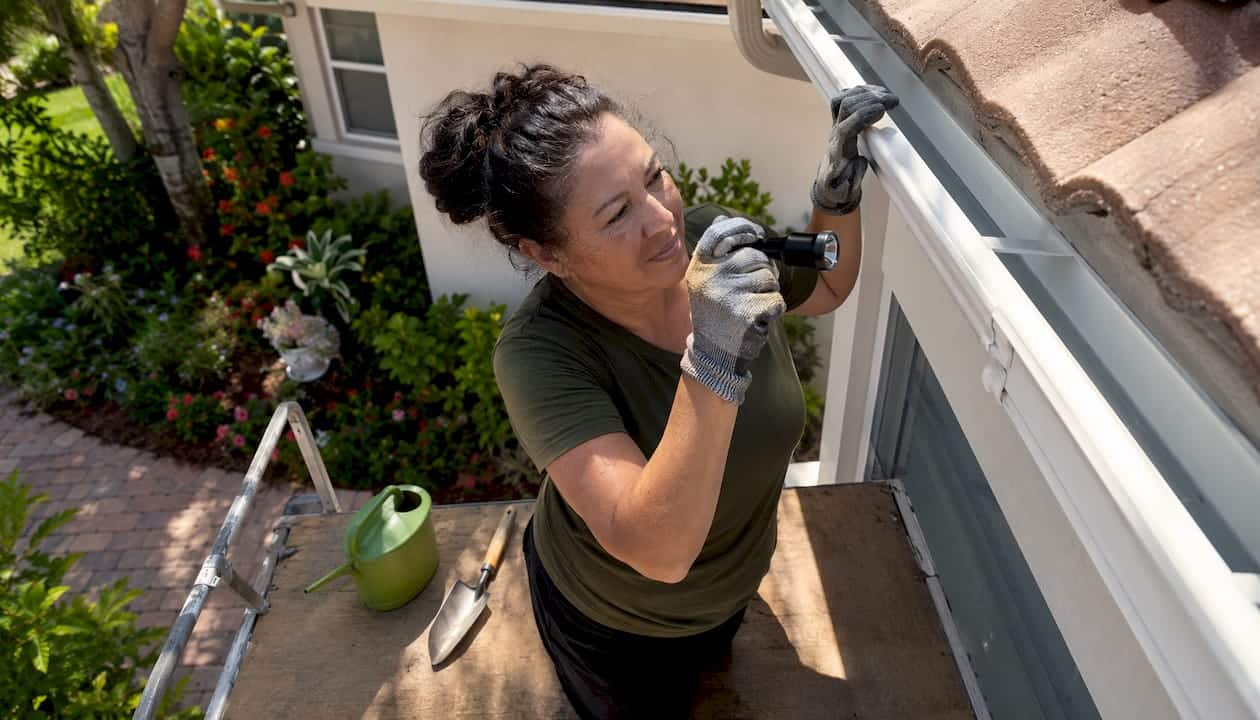
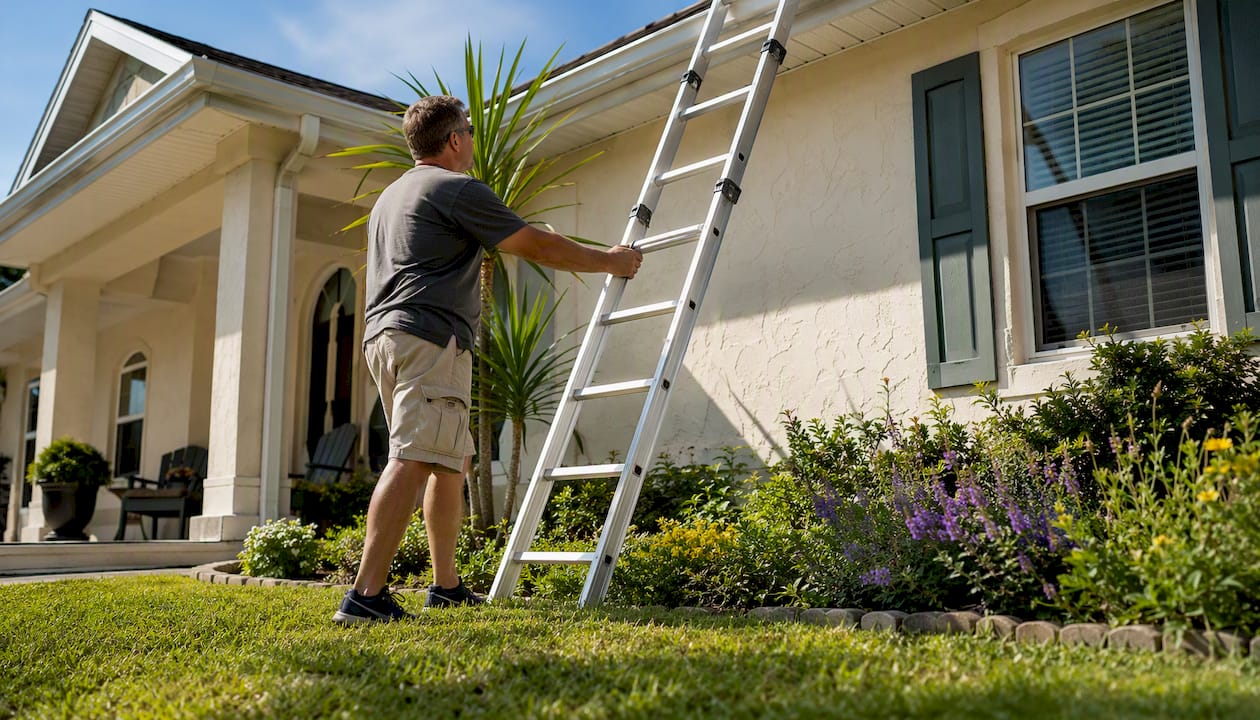
The roof itself also changes the equation. Homeowners researching gutters for metal roofs Florida often run into the fact that roof style affects how water sheds. Without getting into technical claims that vary from house to house, it is enough to say this: some roofs move water quickly enough that a gutter system has to be clean, well-positioned, and draining properly to keep up during heavy weather. If you have a roof that seems to unload water with force, a casual once-over may not be enough.
What many homeowners miss about downspouts
People spend a lot of time looking up at the gutters and not enough time watching where the water ends up. Yet the downspout discharge is where many Florida drainage problems become obvious.
UF/IFAS guidance is clear that roof runoff should be directed away from the foundation and into places that can absorb it. That can mean turf, planting beds, rain gardens, rain barrels, cisterns, or other pervious areas, depending on the property. If the downspout ends right beside the house or blasts water into a spot that cannot handle the flow, the gutter system is only doing half its job.
This is one reason a homeowner may feel frustrated after gutter repair in Alachua County a fresh cleaning. The gutters no longer overflow, but the yard still gets carved up in the same spot. Or water still collects near an entry walk. Or mulch washes out after every hard rain. The system is moving water, yes, but not managing it well.
For homes with screen enclosures and outdoor entertaining space, that becomes a quality-of-life issue too. Thoughtful gutter drainage for pool cages can help avoid the kind of splash, mess, and soil loss that turns a neat patio edge into a maintenance headache.
Gutter guards, replacements, and the temptation to solve everything at once
Once a homeowner gets tired of cleaning, the next thought is often some kind of upgrade. That can be reasonable, but it helps to stay grounded. A guard, a replacement section, or a new system may be useful in some homes, but none of those choices removes the need to pay attention to runoff and maintenance.
People searching for gutter guards Mount Dora FL or seamless gutters Williston FL are usually looking for a way to cut down on recurring work or stop leak-prone trouble spots. That thinking is understandable. Just remember that accessories and replacement systems should still be judged by how well they support the basic goals: moving roof runoff efficiently, keeping it away from the foundation, and sending it to areas that can absorb water.
The same practical mindset applies when people start asking about gutter installation cost factors Florida. Cost is real, but price alone is not the smartest measuring stick. A system that suits the home, the roofline, and the drainage pattern is worth more than the cheapest option that leaves water spilling where it should not. Material, layout, number of downspouts, and how the runoff is managed all affect value, not just the install price.
A few Florida gutter myths that cause bad decisions
There are several gutter myths Florida homeowners run into over and over. One is that if water is pouring over the edge, the gutters only need cleaning. Sometimes yes, sometimes no. Another is that once gutters are installed, they can be ignored except during hurricane season. Florida weather does not work that way. Summer storms alone can expose neglected drainage issues.
A third myth is that appearance is a minor concern compared with function. Function should lead, but appearance still matters because exterior systems are part of the house. Homeowners often think about gutter colors for Florida homes only after a replacement is scheduled, yet color and style can become part of neighborhood or HOA review. Florida HOA law allows associations to have standards for exterior appearance, including colors and styles for certain exterior products, as long as those standards comply with the building code and cannot be used to deny conforming installations. So if you live in a deed-restricted neighborhood, it is smart to check before making changes.
That may seem unrelated to a cleaning decision, but it is not. Many people start with maintenance, discover the gutters need more than a cleanup, and suddenly have to think about replacement details they were not expecting.
How to make the call without overthinking it
You do not need a flowchart taped to the garage wall. Usually the right answer becomes clear when you look at safety, complexity, and consequences.
If you can access the gutters safely, the debris is manageable, and the system has no signs of larger trouble, DIY may be perfectly fine. If the house is hard to work on, the drainage pattern is questionable, or water has already begun affecting the yard or foundation area, bringing in a professional is the more sensible move.
Pay attention to what happens during and after heavy rain. Florida gives homeowners plenty of opportunities to test whether a gutter system is actually working. A clean-looking gutter means very little if the discharge area turns into a problem every time the weather gets serious.
A practical year-round routine for Florida homes
A year-round gutter checklist Florida homeowners can actually stick to does not need to be complicated. The goal is not perfection. It is consistency. In a state where storms are common and runoff moves fast, a little regular attention goes further than a big emergency scramble after something fails.
Look at the gutters before the wettest stretches of the year, and again after periods of heavy storms. Watch where downspouts send water. Check whether mulch, soil, or turf shows signs of repeated washout. If a certain corner of the house always seems wet or messy, treat that as useful evidence, not bad luck.
This kind of routine helps you answer the DIY-versus-pro question honestly. If your checks keep turning up simple debris and nothing else, routine self-maintenance may be enough. If your checks reveal recurring overflow, pooling near the house, or water landing where it should not, then you are past basic cleaning and into a job that deserves professional eyes.
The best choice is the one that keeps water under control
Most gutter decisions sound like maintenance decisions, but they are really water-management decisions. In Fort McCoy, where strong rain events are part of life, that distinction matters. A clean gutter that still sends water toward the foundation is not doing its full job. A homeowner who saves money on a cleanup but misses an ongoing drainage issue may only be postponing a more expensive fix.
If you are on the fence, ask yourself two plain questions. Can I do this safely? And do I understand where the water goes after it leaves the roof? If the answer to either one is no, hiring a pro is usually the wiser call.
That does not mean every home needs professional service every time. It means Florida homes reward practical judgment. Do the simple work yourself when it is truly simple. Bring in help when the height, the condition, or the drainage pattern says this is no longer a basic cleaning job. That is how you protect the house, the yard, and the parts of the property you actually use every day.