Gutter Sizes for Florida Homes in Leesburg: When 5-Inch or 6-Inch Gutters Make Sense
If you own a home in Leesburg, you already know the roof does not get a gentle test in summer. Central and North Florida see hard rain, long humid stretches, and the kind of storm season that exposes every weak point in an exterior system. Gutters are one of those details people ignore until water starts spilling where it should not.
That is why the conversation around gutter sizes for Florida homes matters more here than it might in a milder climate. The question usually sounds simple: should you use 5-inch gutters or move up to 6-inch gutters? In practice, it is not a one-size-fits-all choice, and the best answer depends less on fashion and more on how your home handles water during real Florida weather.
I have seen plenty of homeowners focus on the gutter profile or color first, then treat size as an afterthought. In Leesburg and nearby areas, that can be backwards. A gutter system that looks clean on install day still has to deal with summer downpours, windblown debris, and the steady buildup of pine needles, oak leaves, and acorns. If the system clogs or cannot move water effectively, the nice finish stops mattering pretty fast.
Why the size question comes up so often in Florida
Florida weather puts gutters under a very particular kind of pressure. During storm prep, state university guidance specifically warns that gutters and storm drains can become clogged with debris and should be cleared of needles, leaves, and other material. That is not just housekeeping. A gutter can only move water if water can actually reach the outlet.
In neighborhoods around Leesburg, Lady Lake, Fruitland Park, Wildwood, Ocala, Gainesville, and Newberry, homeowners often deal with a similar pattern. A rain event hits hard, debris shifts on the roof, water races to the gutter line, and any choke point in the system shows up right away. If a gutter is undersized for the way the house sheds water, or if the downspouts cannot drain well because debris has built up, overflow becomes more likely. If the gutter is technically large enough but regularly packed with pine straw or oak litter, you end up with the same visible symptom: water where it does not belong.
That is why the 5-inch versus 6-inch conversation should never happen in isolation. The real issue is not just the metal channel hanging at the edge of the roof. It is the whole path the water follows, from roofline to gutter to downspout to discharge point.
The part many homeowners miss, code sizing and secure installation
Florida code matters here. Gutters and downspouts are required to be sized and discharged in accordance with the Florida Building Code and Plumbing provisions, and exterior gutters and leaders are required to be made from metal or approved plastic and securely fastened with corrosion-resistant fasteners.
That requirement sounds dry, but it has practical weight. It means the right size is not something a contractor should guess at from the driveway. It also means the installation details matter just as much as the nominal width. A larger gutter that is poorly fastened or carelessly discharged is not automatically a better system. In a humid, storm-prone region, secure attachment and corrosion resistance are not luxury upgrades. They are basic competence.

When people ask me about aluminum gutters Central Florida installers recommend, my first thought is not the color chart. It is whether the system will be properly sized, securely fastened, and set up to discharge water where it should. Material choice, workmanship, and drainage planning all sit in the same bucket.
When a 5-inch gutter can still make sense
A 5-inch gutter is not automatically too small for Florida. That would be an easy answer, but easy answers are usually the ones that cost people money.
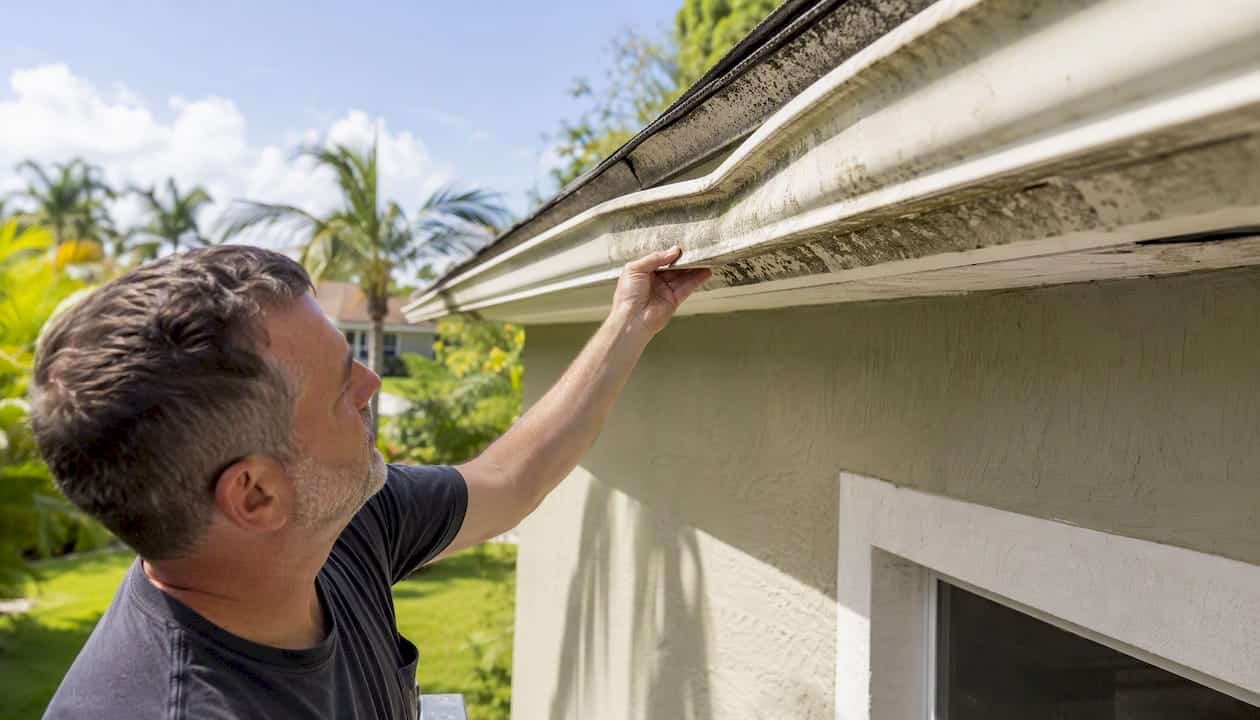
There are many homes where a 5-inch system may be perfectly reasonable, especially if the existing setup has been handling typical rain well, the gutters are kept clear, and there is no pattern of overflow during routine storms. If a homeowner in Leesburg has a functioning system, no visible washout near the foundation, no repeated spillover at the corners, and no chronic clogging at the downspouts, moving up in size just because someone says “bigger is better” may not be necessary.
This comes up a lot during gutter repair Wildwood FL and nearby service calls. Sometimes the real problem is not that the gutter is 5-inch. It is that the outlet is blocked with oak leaves, the downspout elbow is packed tight, or the run has pulled loose enough that water ponds in the channel. In those cases, repair and cleaning can solve what looks, at first glance, like a sizing issue.
A homeowner once described their gutters as “too small for Florida,” but the actual trouble turned out to be a roof edge loaded with pine needles after a stormy week. Once the debris was removed, water moved normally again. That is not an argument against upsizing. It is a reminder to diagnose the real problem before buying a larger system.
When moving to 6-inch deserves a serious look
A 6-inch gutter usually enters the conversation when a house is already telling you the current setup is not coping well. You may see water overshooting the gutter in heavy rain, repeated overflow at the same sections, or a history of drainage trouble even when maintenance has been kept up.
That last phrase matters. If gutters are overflowing because they have not been cleaned in a year, that does not prove the size is wrong. Florida guidance is very clear that gutters and downspouts need cleaning as needed, especially during active growing and rainy periods when organic buildup is common. If debris is the root problem, a wider gutter alone will not give you a free pass on maintenance.
Still, there are homes where stepping up to 6-inch gutters makes practical sense, especially during gutter replacement Gainesville FL or a full exterior update. If you are already replacing damaged runs, revisiting size is smart. The cost difference between repair and full replacement can change the decision, and replacement is the natural moment to ask whether the current system has been struggling under real storm conditions.
A larger gutter https://downspoutsjournal760.terracolumn.com/posts/how-a-typical-gutter-project-moves-forward-for-homes-in-the-high-springs-area may also be worth discussing if the home sits under heavy tree cover and debris load is part of daily life. Pine needles and oak leaves are common in Florida landscapes, and both are specifically mentioned in state guidance as material that should be managed on-site rather than left to wash away. In plain terms, if your roof routinely sheds that kind of debris, your gutter system is dealing with more than rainwater alone. Capacity and maintenance access both matter.
Debris is often the deciding factor more than homeowners expect
This is where the conversation gets more grounded. Florida yards produce real debris, and that debris does not politely stay in the lawn. Live oak leaves, acorns, and pine needles can all make their way into gutters and storm drains. UF/IFAS has also pointed out that leaf litter and yard debris washing into the stormwater system contributes to water quality problems, which means keeping gutters clear is not just a house-protection issue. It is part of responsible runoff management.
For homes under pines or oaks, a gutter system should be judged by how it performs after a windy week, not just on a clear day. That is why homeowners ask about gutter guards for pine needles Florida conditions can overwhelm. Guards can help in some cases, but the key point is that no product changes the need for inspection. Needles, small leaves, and organic buildup still require attention.
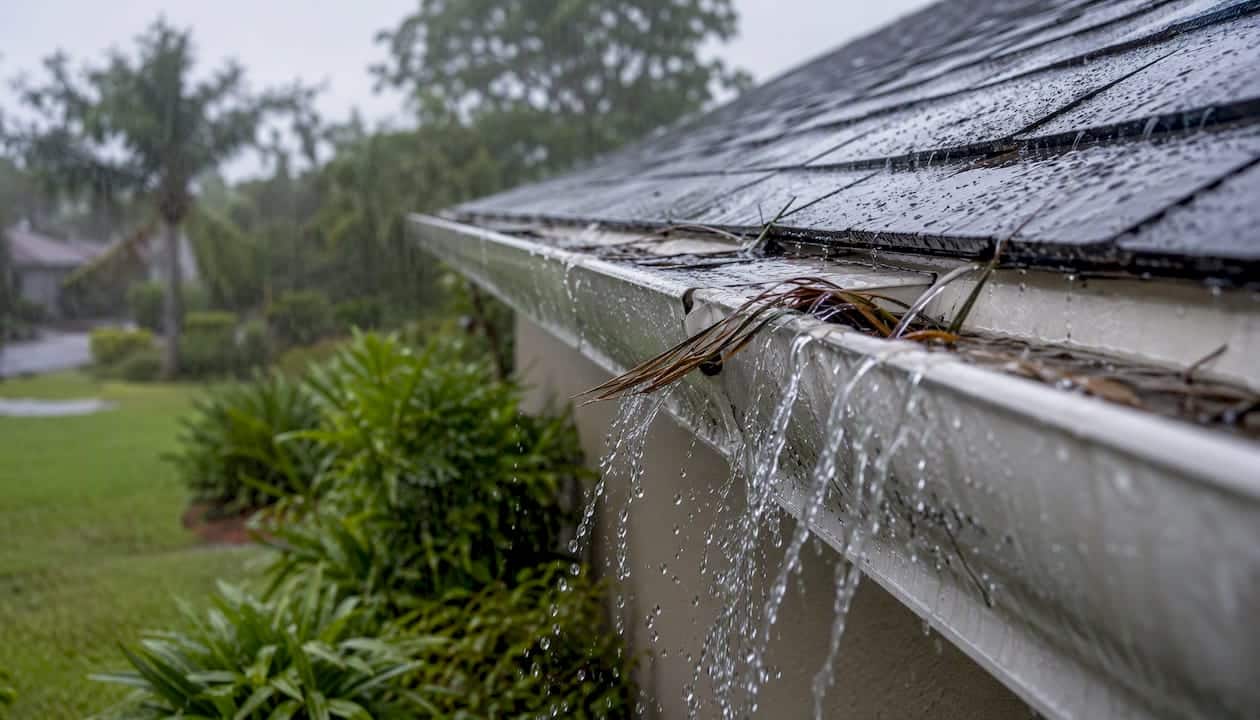
I have noticed that homeowners are often relieved to hear this because it gives them a more realistic expectation. They do not need a magic product. They need a system that is appropriately sized, easy to maintain, and installed by someone who understands how Florida storms expose weak drainage points.
The downspout question is just as important as the gutter width
A wide gutter feeding a poorly functioning downspout is a little like a wide sink draining through a clogged straw. The gutter might hold more water for a moment, but the system still bottlenecks.
That is why downspout drainage Newberry FL homeowners ask about deserves equal attention. The code requirement is not just about gutter size. It also says gutters and downspouts must be sized and discharged properly. “Discharged” is the part people skip over. Water has to go somewhere, and where it goes matters.
If downspouts empty into areas that stay clogged with yard debris, or if discharge points are neglected during storm prep, the whole system can back up faster. The symptom may look like “I need bigger gutters,” when the more accurate diagnosis is “my drainage path is restricted.”
During a site visit, I would rather hear a homeowner describe exactly where they see overflow than hear them insist on a specific size. “The front left corner pours over during hard rain” is useful. “I want 6-inch because my neighbor has them” is not.
K-style, seamless runs, and material choice in this region
Most homeowners shopping for replacement are also comparing profiles and fabrication methods. K-style gutters Lady Lake FL contractors install are popular because the shape works well with many home styles and gives a clean finished line at the eaves. The profile itself, though, does not answer the sizing question. A K-style gutter still has to be selected and installed to match the home’s drainage needs.
The same goes for seamless gutters Ocala FL homeowners often prefer. Seamless runs can reduce some of the trouble spots associated with multiple joints, which is a practical advantage in a region where organic buildup and repeated wetting are common. But “seamless” is not a synonym for “correctly sized,” and it does not replace routine cleaning.
For many homes in this part of the state, aluminum gutters Central Florida residents choose make sense because metal systems are common and Florida code specifically allows metal gutters and leaders, provided they are securely fastened with corrosion-resistant fasteners. The fastening piece is worth repeating. A gutter that is the right width but not well secured can still fail under the stress of wind, water, and accumulated debris.
What homeowners should pay attention to before deciding
Before choosing between 5-inch and 6-inch gutters, it helps to look at the evidence your current system is giving you. Start with the simplest observation: how does the gutter behave during an ordinary summer rain, and how does it behave during a harder storm? Those are not the same test.
Here are the signs that usually deserve a closer conversation with a contractor:
- recurring overflow even after cleaning
- visible buildup of pine needles, oak leaves, or acorns near outlets
- water spilling at corners or trouble spots during heavy rain
- loose sections, sagging runs, or failing fasteners
- repeated need for patchwork repairs instead of a lasting fix
That short list is intentionally practical. It does not pretend every overflow means you need 6-inch gutters, and it does not pretend every 5-inch system is obsolete. It simply points you toward the clues that separate a maintenance issue from a replacement decision.
Cleaning matters more in Florida than many people expect
There is a reason gutter cleaning Fruitland Park FL searches spike around storm season. In Florida, maintenance is not an optional extra. UF/IFAS guidance for storm prep and for green stormwater infrastructure both stress cleaning gutters and downspouts as needed and removing organic buildup, especially in summer.
That timing matters. Summer is when growth is active, storms are frequent, and wet debris turns into compacted debris fast. A little pine straw in early June can become a matted blockage by late July. Oak litter can settle around outlets and corners, then trap even more material behind it.
The homeowners who have the fewest gutter headaches are rarely the ones with the fanciest systems. They are the ones who notice conditions early. They know where the trees drop most heavily. They clean before storm season gets serious, not after the first dramatic overflow. They do not assume yesterday’s clear downspout is still clear today.
Storm-ready gutters are about preparation, not bravado
The phrase storm ready gutters Florida can sound like marketing copy, but there is a plain meaning behind it. A storm-ready system is one that has been cleaned, inspected, and kept in working order before severe weather arrives. It is securely fastened. It discharges water properly. It is not half full of decomposing leaf litter when the next band of heavy rain rolls through.
That definition is more useful than any sales slogan because it puts the focus where it belongs. A 6-inch gutter stuffed with pine needles is not storm-ready. Neither is a 5-inch gutter hanging loose at the fascia. Readiness is about function.
For many Leesburg homeowners, storm readiness is also a routine, not a single service call. It means checking the system at the start of storm season, after major wind events, and whenever tree debris has clearly increased. Florida weather does not reward neglect for long.
How to talk with a contractor without getting a vague answer
If you are hiring a gutter contractor Florida homeowners should look for someone willing to discuss code compliance, fastening methods, debris patterns, and discharge points, not just price per foot. A good contractor should be able to explain why they recommend staying with 5-inch or moving to 6-inch, based on what the house is actually doing.
A few questions can quickly separate a thoughtful estimate from a rushed one:
- Are you seeing a sizing issue, a clogging issue, or both?
- How will the downspouts discharge, and do you see any problem points?
- Are the existing fasteners and attachments failing?
- Would repair solve this, or are we past the point where replacement makes more sense?
- How should this system be maintained given the trees around the house?
Notice that none of those questions ask for a sales pitch. They ask for judgment. That is what you are paying for.
When homeowners seek gutter replacement Gainesville FL or gutter repair Wildwood FL services, they often get multiple estimates that all use confident language. Confidence alone means very little. Specific observations matter more. If one contractor points to packed downspouts, corroded fasteners, and repeated overflow stains, while another simply says “you need bigger gutters,” the first one is giving you something concrete to work with.
A sensible way to decide in Leesburg
For a home in Leesburg, the right choice usually comes down to a straightforward evaluation. If the current 5-inch system has worked well, remains securely attached, and only struggles when debris has been allowed to build up, then cleaning, repair, or selective improvement may be the sensible path. If the system has a repeated history of overflow during hard rains even when it is maintained, or if you are already planning a full replacement, then it is worth discussing whether 6-inch gutters would better match the way the home handles Florida storms.
That is not a flashy answer, but it is the honest one.
The biggest mistake I see is treating gutter size as if it can compensate for every other weakness. It cannot. Not for pine needles. Not for oak leaves. Not for clogged outlets. Not for loose fasteners. Not for poor discharge. Florida homes need the whole drainage chain to work.
So if you are weighing 5-inch against 6-inch gutters, start with the evidence on your own house. Watch the next hard rain. Look for where water spills, where debris collects, and whether the downspouts are actually moving water away as intended. Then talk with a contractor who understands Florida code, Florida weather, and Florida maintenance realities.
That is how you choose the right gutter size for a Leesburg home, not by default, and not by guesswork.