Gutters for Metal Roofs in Okahumpka: What Homeowners Should Know
Metal roofs make a lot of sense in Florida. They shed water fast, they look sharp, and on the right house they can last through years of hard weather with less fuss than many other roof types. But that speed, the very thing people like about metal, is also why gutters matter so much.
In a place like Okahumpka, where heavy summer storms can dump a surprising amount of water in a short stretch, roof runoff needs somewhere to go. If it is not captured and directed well, it can beat up planting beds, splash mud onto walls, pool near the foundation, and turn a neat patio edge into a soggy mess. Around lanais and screened enclosures, bad drainage can make outdoor living areas harder to enjoy. Florida guidance consistently points to the same principle: move roof water away from the house and into areas that can absorb it, like lawn or planted beds, instead of letting it rush and collect where it causes trouble.
That is the real job of gutters on a metal roof in Central Florida. They are not just trim. They are part of how the whole property handles water.
Why metal roofs change the gutter conversation
A metal roof often sends water downslope quickly. During a routine rain, that may not seem dramatic. During a thunderstorm, it can be. The faster the roof sheds water, the more important it is for the gutter system to catch it cleanly and move it toward downspouts without overflowing.
This is where homeowners sometimes get tripped up. They assume a gutter is a gutter, so any profile, any placement, and any drainage path will do. In practice, the roof and the gutter have to work together. A setup that feels acceptable on a mild day may show its weaknesses the first time a hard summer downpour rolls through Lake County.
On homes in and around Okahumpka, I would pay close attention to two things before thinking about colors, accessories, or add-ons. First, where does the water go when it leaves the roof? Second, where does it go after it leaves the downspout? Those two questions solve more problems than most people expect.
Florida-friendly landscape guidance puts a lot of emphasis on keeping runoff on site when possible and directing it into areas that can absorb water. That is a practical goal for most single-family homes. The point is not to dump gallons of roof water right next to the slab or into a walkway low spot. The point is to slow it down and let the yard do some of the work.
The biggest mistake is focusing only on the gutter itself
Homeowners shopping for gutters for metal roofs Florida often compare appearance first. K-style or half-round, white or bronze, standard sections or custom-made runs. Those choices matter, but they matter after the drainage plan makes sense.
A good system starts by reading the site. Does the yard slope toward the house or away from it? Are there mulched beds at the corners that already wash out? Does one side of the home face a pool deck or screen enclosure where overshoot and splashback would be especially annoying? Is there a turf area or planted zone where downspouts can discharge without carving a trench?
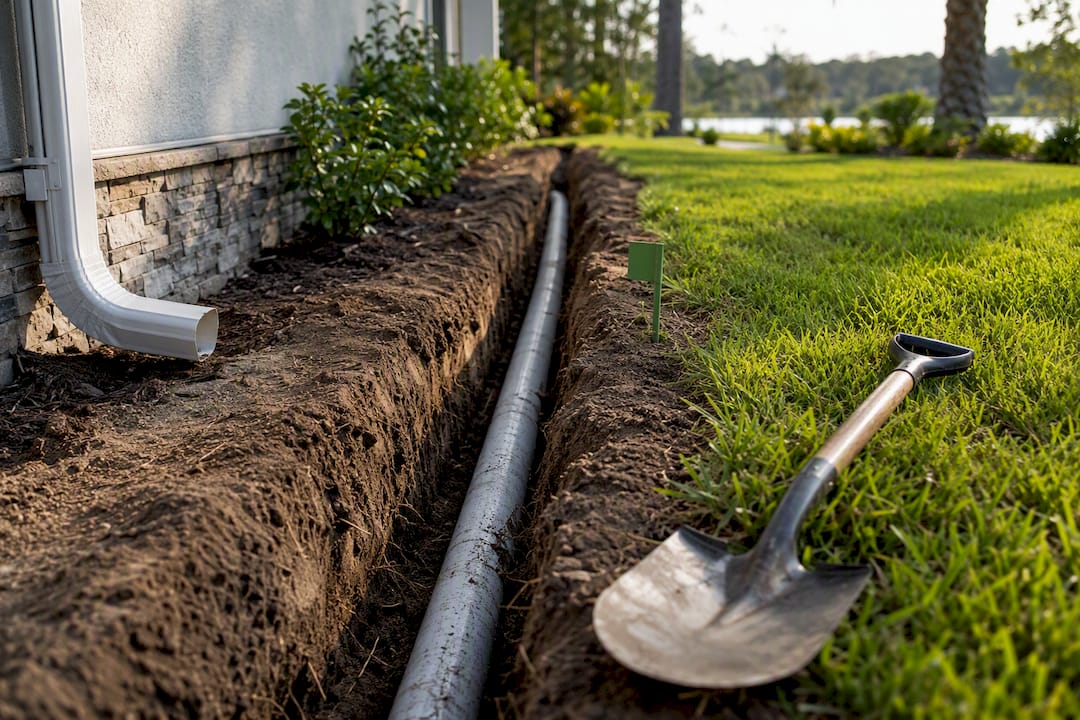
UF/IFAS guidance is pretty clear that downspouts should direct water away from the house and into absorbent areas, because pooled water near the foundation can also encourage pest issues. That may sound obvious, but it gets ignored all the time. A pretty new gutter system that dumps runoff into a compacted strip beside the wall is still a drainage problem. It is just a more expensive one.
This is also why gutter drainage for pool cages deserves extra attention. Around screen enclosures, decks, and outdoor seating areas, water does not just disappear because the gutter is attached. If the downspout exits into a narrow side yard and then washes back toward the cage or patio edge, you can end up with erosion, muddy splatter, and slick spots right where people walk barefoot. On pool-adjacent properties, careful runoff management matters.
What to expect from a well-planned setup
A well-planned gutter system on a metal roof should do a few simple things consistently. It should catch normal rainfall without dribbling all over the fascia line. It should handle stronger storms without frequent overflow in the same trouble spots. It should send water to downspouts that discharge away from the foundation. And it should work with the landscape rather than tearing it up.
That last part is easy to underestimate. Many Florida yards have sandy soils, which absorb water faster than heavier soils, but fast-moving runoff can still gouge out mulch, expose roots, and leave ugly channels. If your downspouts empty into turf, beds, rain gardens, or other pervious areas, you are generally on the right track. If they empty where water races straight across pavement or settles at the base of the house, the plan probably needs work.
I have seen homeowners spend a lot of time debating whether seamless gutters Williston FL are better than sectional systems, or whether gutter guards Mount Dora FL are worth the upcharge, while overlooking a far more basic issue: their downspouts are aimed at the wrong place. No guard fixes a drainage path that sends water where it should never go.
Gutter installation cost factors Florida homeowners should think about
When people ask about gutter installation cost factors Florida, they often want one clean number. Realistically, cost depends on scope and site conditions more than a single statewide average can capture.
A straightforward one-story home with easy access is a different project from a home with several roof lines, long runs, tight side yards, or outdoor features that limit ladder placement. If the installer has to solve a drainage problem around a screen enclosure or reroute discharge to a more suitable area of the yard, that can affect labor and materials too. So can aesthetic choices, especially if the homeowner wants a particular finish to match trim, roof color, or an HOA preference.
Repairs can also shift the math. If a gutter is sagging, leaking at joints, or draining poorly because of clogs and slope issues, sometimes repair makes sense. Sometimes it is money thrown after a tired system. That is where an honest on-site evaluation matters more than a phone quote. The same goes for gutter repair Hawthorne FL or service calls in older neighborhoods where drainage patterns have changed over time with landscaping, hardscape additions, or settlement.
The cheapest bid is not always the least expensive choice over a few rainy seasons. If the system still dumps water against the house or over a walkway, you will keep paying for the same problem in different ways.
Color matters more than many people expect
At first glance, color sounds cosmetic. In practice, gutter colors for Florida homes often sit at the intersection of curb appeal, resale, and neighborhood rules.
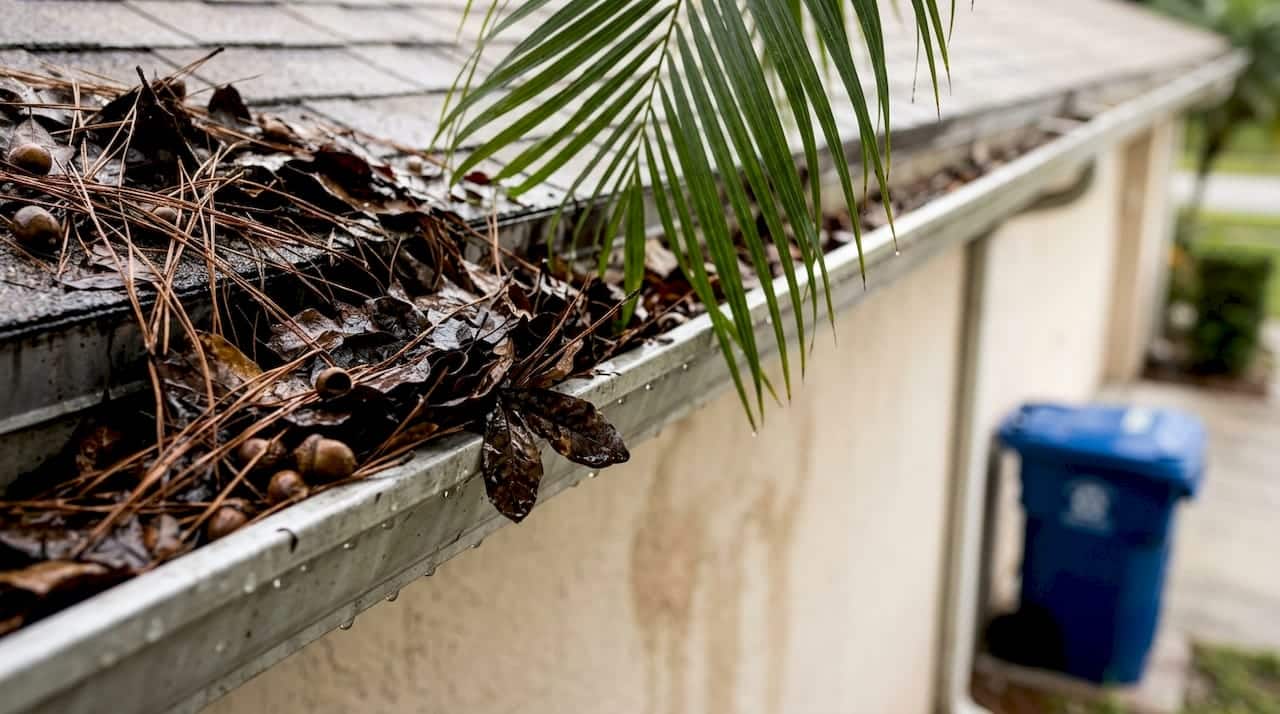
A gutter can blend into trim and disappear, or it can frame the roofline and become part of the look. Neither is wrong. The best choice depends on the house. On some homes, a close trim match looks clean and quiet. On others, especially where the metal roof has a strong visual presence, a coordinated contrast can look more intentional.
In HOA communities, homeowners should pause before ordering. Florida law gives associations authority over exterior appearance standards, including color and style specifications for certain exterior products, though those standards still have to comply with applicable building code rules and cannot be used to block conforming installations outright. In plain language, your community may have a say about appearance, so check before the truck shows up.
That matters in places beyond Okahumpka too. Someone searching gutter colors for Florida homes may be focused on style, but the smarter move is style plus approval plus function. A good-looking gutter that violates neighborhood guidelines creates its own headache.
The myths that keep causing trouble
A lot of gutter myths Florida homeowners repeat are rooted in half-truths. One common idea is that a metal roof does not need gutters because water runs off so efficiently. That skips the obvious next step. Efficient runoff still has to land somewhere. If anything, the quick-shedding nature of metal can make unmanaged runoff more aggressive.
Another myth is that if the yard is sandy, drainage will take care of itself. Sandy soils can absorb water well, but not every discharge point is equal. Water released beside the foundation, at the corner of a patio, or into a bed with loose mulch can still create a mess before the soil catches up.
A third myth is that once gutters are installed, they are done forever except for the occasional hose spray. Florida conditions do not support that fantasy. Leaf litter and debris build up. Storms shift things. Downspouts clog. Screens and guards help in some situations, but they do not eliminate the need for inspection.
This is where homeowners in surrounding towns run into the same pattern. Whether someone is booking gutter cleaning Dunnellon FL or comparing options for a newer home near Mount Dora, the basic truth is the same. Gutters are part of routine property maintenance, not a one-time decision you get to forget.
DIY gutter cleaning or hire a pro?
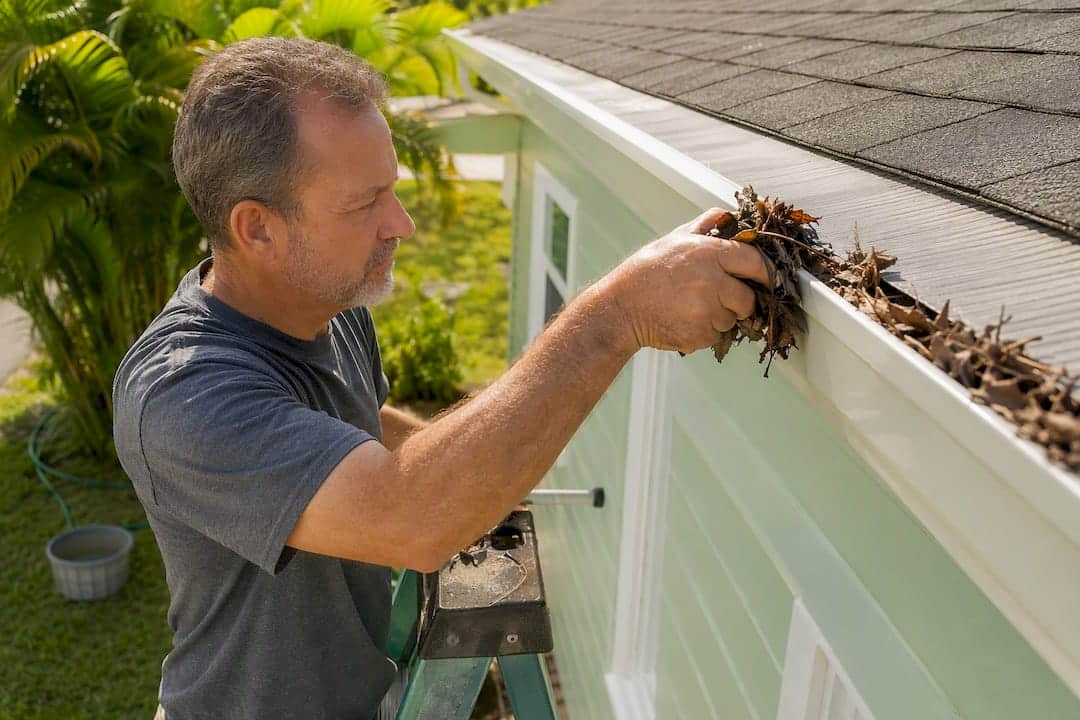
This is one of the few places where a simple answer is not especially helpful. DIY gutter cleaning or hire a pro depends on the home, the height, the access, and your comfort level working on ladders.
If you have a single-story section with easy footing and you are already attentive about home maintenance, a light cleaning and visual check may be within reach. If your roofline is higher, access is awkward, or you are dealing with long runs near a pool deck, screen enclosure, or landscaping that limits stable ladder setup, that is another story.
There is also a difference between removing visible debris and actually diagnosing why a system is not performing. A homeowner may clear leaves and think the job is done, while a pro gutter services in Leesburg notices standing water, poor pitch, a loose connection, or a downspout discharge that has been eroding a bed for months.
For many people, the safest middle ground is to do occasional visual monitoring from the ground and call for service when performance changes. Overflow during ordinary rain, stains on walls, washouts below downspouts, or recurring puddles near the foundation are all signs the system needs attention.
Where gutter guards fit, and where they do not
Gutter guards Mount Dora FL is a phrase people search when they are tired of cleaning, and that makes sense. Guards can reduce how much debris settles in the gutter, but they are not a magic shield against every maintenance issue.
Florida homes still deal with wind-driven debris, heavy rain, and the occasional storm event that tests every exterior component. Even with guards, water still needs a clear path through the gutter and out the downspouts. If the discharge area is poor, guards will not solve the bigger drainage problem. If the gutter itself is undersized for the roof runoff pattern, a cover on top does not change that either.
The fairest way to think about guards is as a maintenance reducer in some settings, not a maintenance eraser. Homeowners who go in with realistic expectations tend to be happier with the result.
Seamless, sectional, old, new, the real issue is performance
Seamless gutters Williston FL gets plenty of attention in search results because people understandably want fewer leak points and a cleaner look. There can be practical advantages to custom-fit runs. But from a homeowner standpoint, the bigger concern is whether the whole assembly performs under local weather.
A beautiful continuous run is not impressive if the downspout exits onto a hard surface and sends water right back toward the house. Likewise, an older sectional system is not automatically a failure if it drains well, stays attached, and directs water to the right place.
That is why I like to judge gutter systems after a rain whenever possible. Dry-day inspections tell you part of the story. Watching where water actually travels tells you the rest.
A practical year-round gutter checklist Florida homeowners can use
Seasonal maintenance in Florida is less about dramatic winter shutdowns and more about staying ahead of storms, humidity, and debris. A short, repeatable routine usually works better than waiting for a crisis.
- Walk the house after a strong rain and look for overflow, splashback, or puddling near the foundation.
- Check that downspouts discharge into lawn or planted areas that can absorb water, not against the wall.
- Look for mulch washout, soil erosion, or muddy tracks near pool decks, lanais, and screen enclosures.
- Clear debris when buildup is visible, or schedule service if access is difficult or unsafe.
- Recheck after major storms, because drainage problems often show up right after heavy weather.
That kind of simple year-round gutter checklist Florida residents can follow does more good than an elaborate maintenance calendar nobody sticks with.
Pool cages, patios, and those awkward Florida edges
Some of the trickiest gutter decisions happen not at the front of the house, but around the back where people actually spend time. A screen enclosure, patio, or pool deck changes how drainage problems feel. What might be an annoyance in a side yard becomes a quality-of-life issue when it leaves grime on pavers, creates standing water near a doorway, or cuts channels through decorative beds.
This is why gutter drainage for pool cages needs a little more forethought. You want runoff controlled before it reaches those finished outdoor spaces, and you want discharge directed into absorbent parts of the yard wherever feasible. That aligns with Florida-friendly stormwater advice and tends to preserve both the landscape and the livability of the space.
A homeowner may not notice poor drainage from the street. They notice it when guests track mud across the deck after a storm.
When repair is enough, and when replacement makes more sense
Not every bad gutter needs to be replaced. Sometimes the issue is a clog, a minor separation, or a discharge point that can be improved without starting over. Other times, the system has too many recurring problems to justify patchwork.
A few warning signs are worth taking seriously:
- overflow in the same spot during routine rain
- persistent puddling or soggy soil near the foundation
- visible erosion under downspouts
- repeated clogging despite cleaning
- sections that appear loose, misaligned, or no longer drain properly
That is the point where a repair visit, whether you are calling about gutter repair Hawthorne FL or a similar service closer to Okahumpka, should include more than a quick sealant fix. The real question is whether the existing layout still serves the house and yard.
What homeowners in Okahumpka should prioritize first
If I were helping a homeowner sort this out without overcomplicating it, I would start with function before finish. Watch the house in a hard rain. See where the roof water lands, where it travels, and where it lingers. Then ask whether the current setup moves that water away from the foundation and into areas that can absorb it.
Only after that would I spend energy on profile, color, guards, or brand preferences.
That order matters because Florida weather exposes weak drainage decisions fast. Summer thunderstorms do not care whether the gutter color matches the soffit perfectly. If the water is dumping beside the slab or washing out the bed near the lanai, the system is not doing its job.
For homeowners with metal roofs, that lesson is even sharper. The roof may shed water beautifully. Your gutters need to keep up.
Done right, gutters on a metal roof protect more than the edge of the roofline. They help protect the foundation, the landscape, the outdoor living areas, and the overall usability of the property through a long Florida rainy season. In Okahumpka, that is not a small detail. It is part of owning a house that works the way it should when the skies open up.